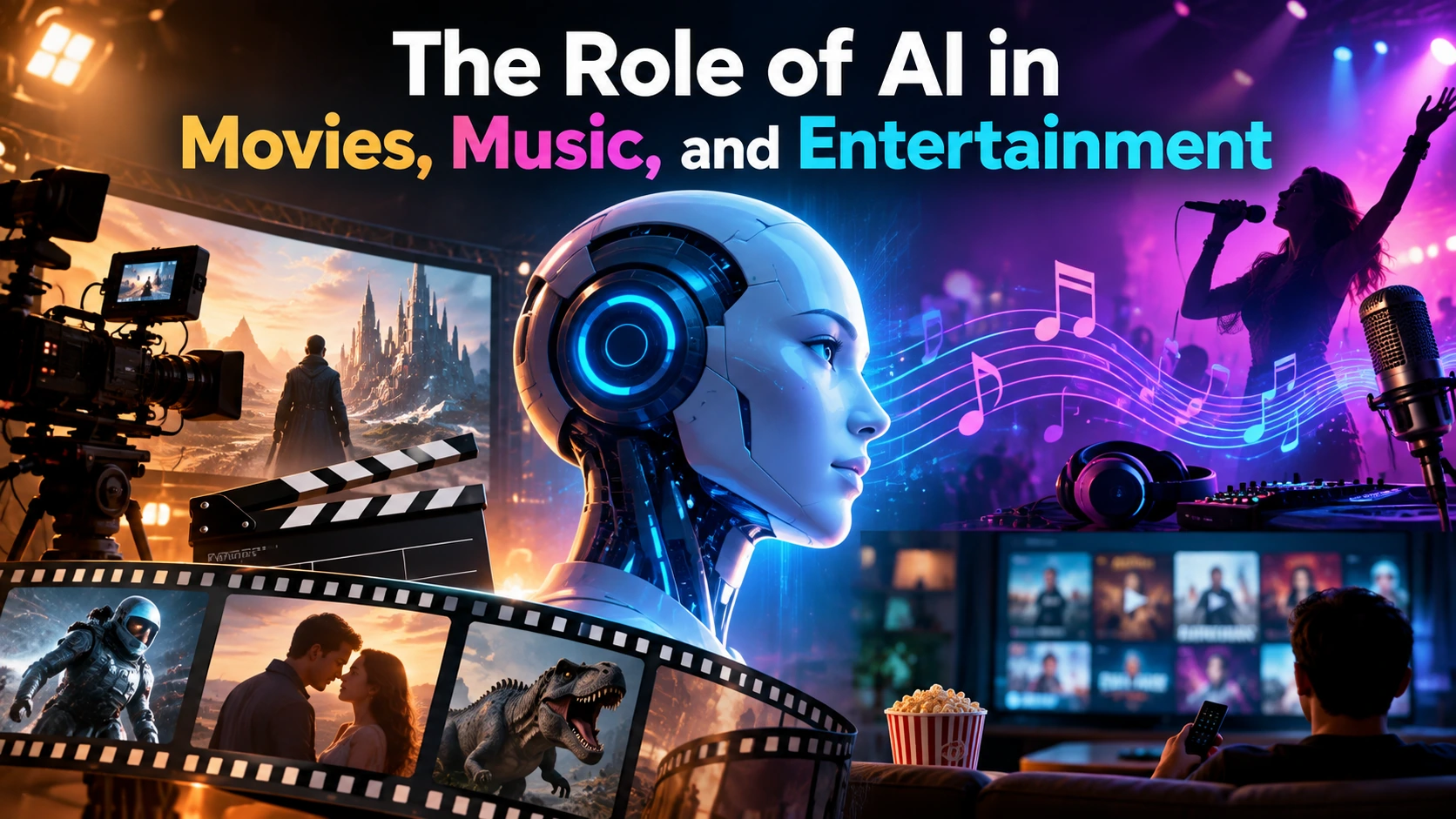
Artificial intelligence is changing the entertainment industry by influencing how movies are created, music is produced, games are designed, and audiences discover content. What once seemed like futuristic technology is increasingly becoming part of everyday creative workflows. From helping filmmakers organize large amounts of footage to assisting musicians with production tasks, AI can support many stages of entertainment.
At the same time, the use of AI raises important questions about creativity, copyright, employment, consent, and the role of human artists. As the technology develops, the entertainment industry is likely to continue balancing technological possibilities with creative and ethical considerations.
AI in Movie Production
Filmmaking involves numerous stages, including writing, planning, filming, editing, visual effects, sound design, and marketing. AI can assist with several of these processes.
During pre-production, AI-powered tools can help organize scripts, analyze scenes, create production schedules, and support story development. Filmmakers can use digital tools to explore different visual concepts before filming begins.
AI is also increasingly relevant to post-production. Automated systems can help editors sort footage, identify scenes, improve audio, create captions, and perform repetitive editing tasks. This can save time and allow creative professionals to concentrate on storytelling and artistic decisions.
AI and Visual Effects
Modern movies often rely on computer-generated imagery and sophisticated visual effects. AI can assist artists by automating certain repetitive processes, enhancing images, generating backgrounds, and supporting complex visual workflows.
For example, machine-learning systems can help identify objects within frames or track movement across footage. These capabilities may make some visual-effects tasks faster, although professional artists remain important for creative direction, refinement, and quality control.
AI in Screenwriting and Story Development
AI can also be used as a brainstorming assistant during the writing process. Writers may use it to explore character ideas, generate possible story directions, organize information, or identify inconsistencies in a draft.
However, storytelling depends heavily on human experience, emotion, cultural understanding, and creative intention. AI-generated ideas may be useful starting points, but writers still need to shape the material into a meaningful and original story.
Questions about authorship and copyright also become important when AI-generated material is incorporated into professional productions.
AI in Music Creation
The music industry is another area experiencing significant technological change. AI tools can assist with composition, sound editing, mastering, arrangement, and other production tasks.
Musicians and producers can use AI to experiment with melodies, rhythms, harmonies, or musical structures. Production tools can also help clean recordings, balance sounds, and identify technical issues.
Rather than replacing every part of music production, AI can function as another creative tool. Artists can experiment more quickly and explore ideas that might otherwise require considerable time.
Personalized Entertainment
AI also influences how audiences discover entertainment. Streaming services and digital platforms can analyze viewing or listening patterns to recommend movies, shows, songs, and other content.
Personalized recommendations can make it easier for users to discover material that matches their interests. For entertainment companies, these systems can provide insights into audience preferences and help inform content strategies.
However, recommendation systems can also create concerns about limited exposure to unfamiliar content. If algorithms repeatedly recommend similar material, users may miss creative work outside their usual preferences.
AI in Gaming and Interactive Entertainment
Video games combine storytelling, graphics, music, programming, and interactive experiences, making them particularly suitable for AI applications.
AI can help create more responsive non-player characters, generate environments, analyze player behavior, and support game testing. Developers can use these tools to create more dynamic experiences while reducing some repetitive development tasks.
Generative technology may also help teams produce early concepts for characters, environments, dialogue, or other game elements.
Benefits for Entertainment Professionals
One of AI’s major advantages is efficiency. Entertainment projects often involve enormous amounts of content and repetitive work. Automating selected tasks can reduce production time and allow professionals to focus on areas where human judgment is most valuable.
AI can also make experimentation easier. Small creative teams may be able to test more concepts without requiring extensive resources for every early-stage idea.
Challenges and Ethical Questions
AI’s growing role also creates challenges. One major concern involves the use of performers’ voices, faces, music, writing, or artwork without appropriate permission.
There are also concerns about employment and how automation may affect certain creative and technical roles. Another issue is determining whether AI-generated material has been trained on copyrighted works and how resulting content should be treated.
The entertainment industry therefore needs clear standards surrounding consent, compensation, attribution, copyright, and responsible use.
The Future of AI in Entertainment
AI is unlikely to eliminate the need for human creativity. Entertainment depends on emotions, personal experiences, cultural perspectives, performance, and the ability to connect with an audience.
Instead, AI may increasingly become a supporting technology. Filmmakers, musicians, writers, designers, and developers can use it to automate repetitive work and explore ideas while retaining creative control.
Conclusion
The role of AI in movies, music, and entertainment is expanding rapidly. It can assist with production, visual effects, editing, music creation, recommendations, gaming, and many other areas.
The biggest opportunity may come from combining technological efficiency with human imagination. As the industry continues to adopt AI, responsible practices will be essential to ensure that innovation supports—not undermines—the artists and audiences who make entertainment meaningful.